Description
Course Title: OSHA 1910: Respiratory Protection
Date Recorded:
Date Reviewed:
Date of Expiration:
Location: Online
Method: Self Directed
#CE HOURS: 1
Speaker(s) & Bio:
Amanda Kirwin, BCDA, RPA, is co-founder of Last Green Valley Dental Consulting and Mentoring, where she helps dental practices tighten their systems and stay on the right side of OSHA. As a Certified Respiratory Program Administrator, she builds and runs respiratory protection programs in working offices — so she’s teaching this course from hands-on experience, not out of a binder. Her background is in dental assisting education, and she’s known for making compliance and infection-control requirements click for the whole team, not just the doctor.
Course Description:
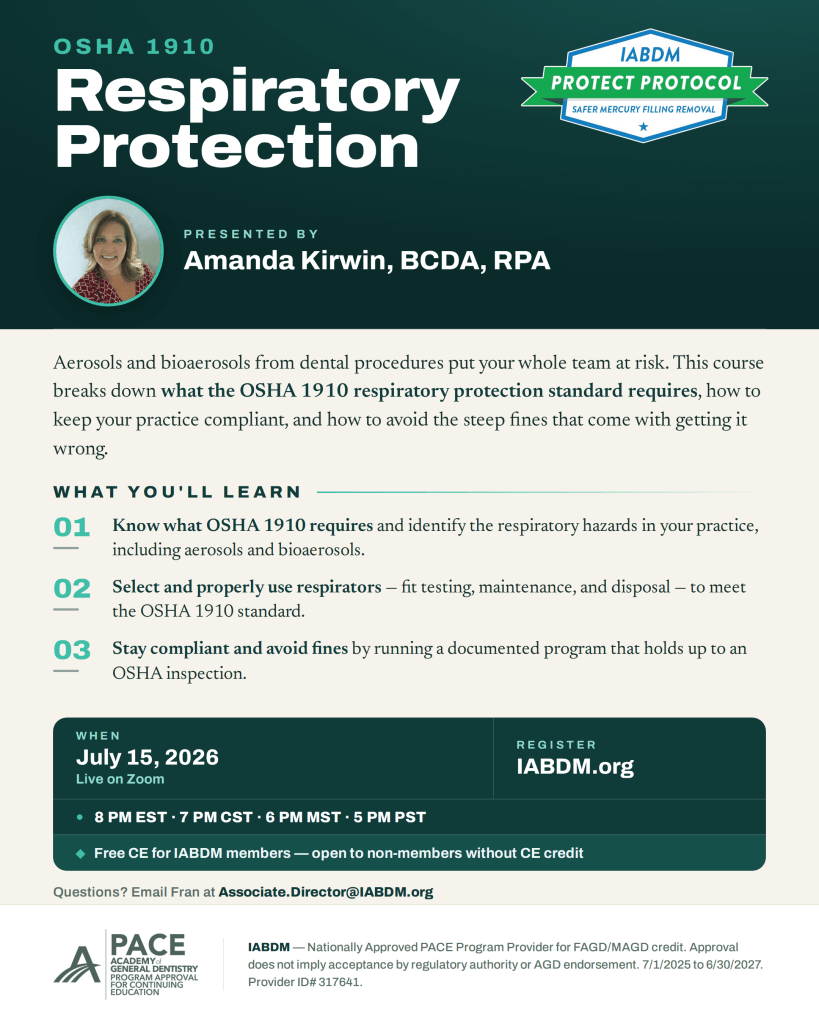
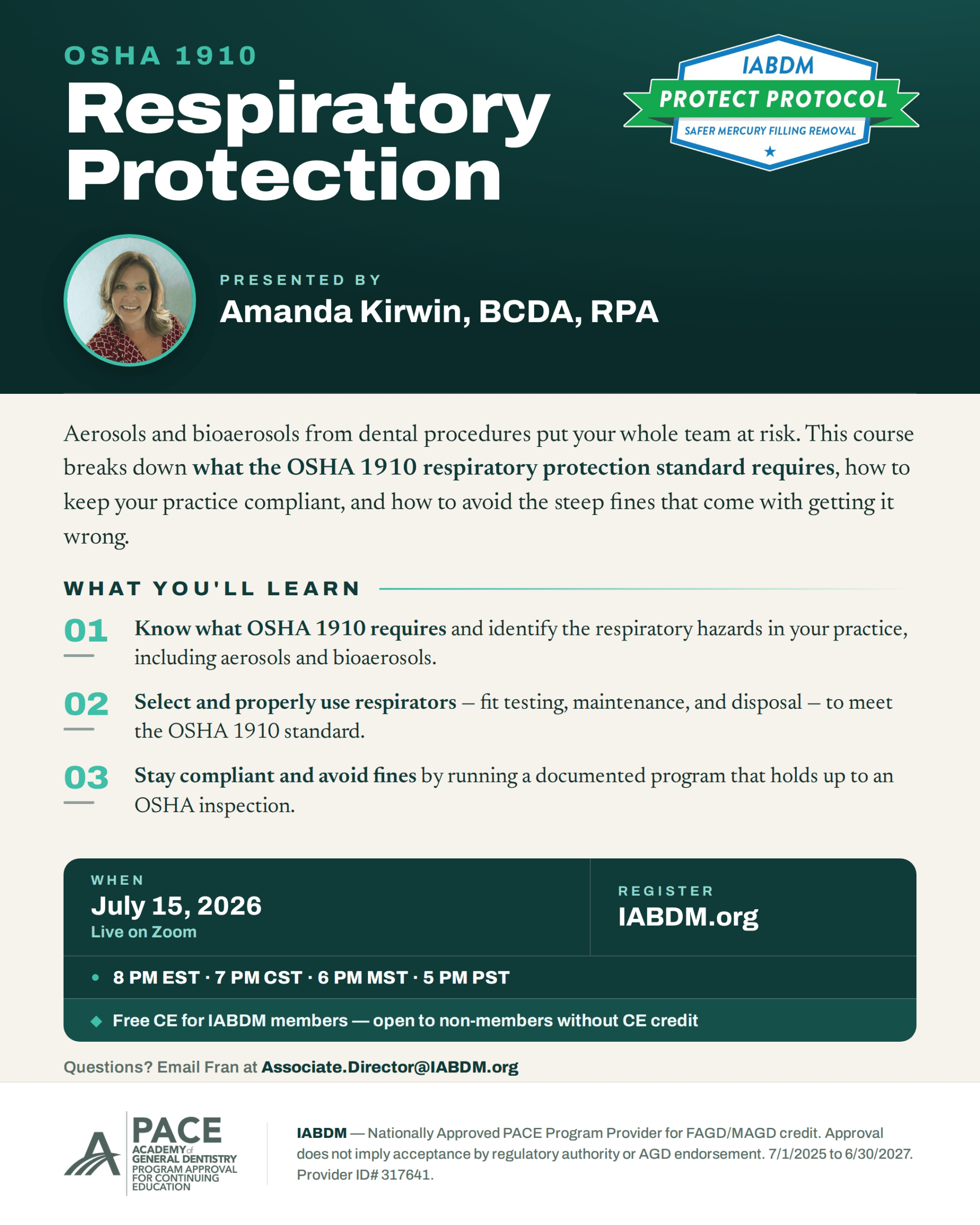
Every dental procedure generates aerosols and bioaerosols the whole team breathes in. OSHA’s respiratory protection standard (1910) sets out exactly how practices are supposed to manage that exposure — and most offices don’t find out they fall short until an inspector is standing in the operatory or a fine lands on the desk.
This course takes the standard apart in plain language and shows you how to build a respiratory protection program that actually meets it. You’ll work through hazard assessment, respirator selection, fit testing, proper use, maintenance and disposal of equipment, and the documentation and recordkeeping that hold up when someone asks to see them. Nothing here is theory for its own sake — it’s built to go straight back into your practice.
By the end, you’ll know what the law requires of your office, where your current gaps are, and how to close them before they cost you.
Course Objectives:
- Explain what the OSHA 1910 respiratory protection standard requires of a dental practice.
- Identify the respiratory hazards present during dental procedures, including aerosols and bioaerosols.
- Select appropriate respiratory protection and demonstrate proper fit testing, use, maintenance, and disposal.
- Build and manage a documented, compliant respiratory protection program that holds up to an OSHA inspection.
Copy of Publicity: